Evaluating Watercolor Forest Trees Clipart for Creative Projects
For designers, crafters, and hobbyists seeking to infuse a natural, organic aesthetic into their work, Watercolor Forest Trees Clipart represents a versatile digital asset. These illustrations typically feature hand-painted botanical elements rendered in watercolor media, capturing the soft edges, fluid color blends, and textural nuances characteristic of traditional painting. Unlike rigid vector graphics or flat digital icons, watercolor clipart offers a sense of depth and artistic imperfection that resonates well with audiences looking for warmth and authenticity. Understanding the specific attributes, file specifications, and ideal use cases for these assets is essential for determining whether they align with your current project requirements.
Understanding the Asset and File Specifications
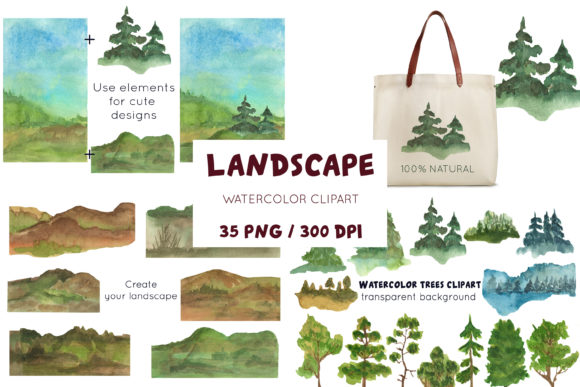
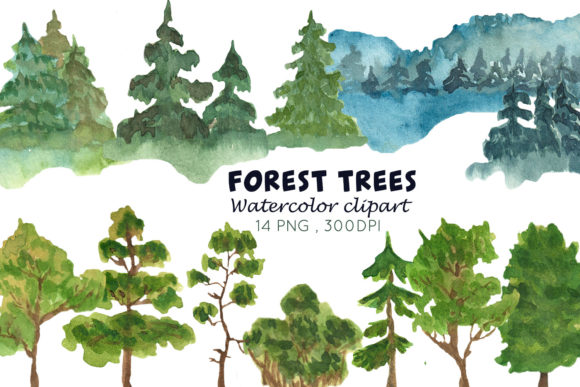
At its core, this collection consists of 14 distinct hand-painted elements. The term "hand-painted" indicates that the original artwork was created using physical brushes and watercolor paints before being digitized, rather than being generated entirely within software. This process results in unique variations in pigment density and brushstroke texture that are difficult to replicate artificially. The files are provided in PNG format, which is critical for maintaining transparency. This allows users to layer the tree illustrations over various backgrounds without unsightly white boxes surrounding the image.
A key technical specification to consider is the resolution. These images are supplied at 300 DPI (dots per inch). In the context of digital design, this high resolution ensures that the images remain crisp and detailed even when scaled up for large-format printing. For users accustomed to low-resolution web graphics, the difference in quality is significant. It means the artwork is suitable for professional-grade output, from small business cards to large poster prints, without pixelation. However, it is important to manage expectations regarding the package contents: while product listings often display mockups showing the trees applied to mugs, tote bags, or framed art, these mockups are for demonstration purposes only and are not included in the sale. The purchaser receives only the digital image files.
Ideal Applications and Use Cases
The versatility of Watercolor Forest Trees Clipart makes it a strong fit for a wide array of creative endeavors. One primary area of application is in the realm of paper crafts and scrapbooking. The organic nature of watercolor complements the tactile feel of scrapbook paper, allowing creators to build layered compositions that evoke a sense of nostalgia or connection to nature. Because the background of the PNG files is transparent, these elements can be easily integrated into custom scrapbook page layouts or used to embellish handmade journals.
In the sphere of event planning and stationery, these illustrations serve as excellent components for invitation designs. Whether for a woodland-themed wedding, a baby shower, or a rustic birthday party, the soft tones of watercolor trees provide an elegant backdrop or border element. They can be arranged to frame text or scattered across the page to create a subtle, atmospheric pattern. Similarly, for postcard design, the high-resolution files ensure that the final printed product maintains its artistic integrity. Users can combine the tree elements with typography to create greeting cards for holidays, thank-you notes, or correspondence that requires a personal, artistic touch.
Beyond paper goods, these assets are highly effective for surface pattern design and textile applications. Designers can arrange the 14 elements to create seamless or semi-seamless patterns for fabric printing. The abstract quality of the watercolor style works particularly well for home decor items such as throw pillows, curtains, or upholstery. Furthermore, the clipart is suitable for gift packaging; users can print the designs onto transfer paper or cardstock to create custom gift tags, wrapping paper accents, or decorative seals for packages, adding a bespoke element to gift-giving.
Digital Integration and Web Usage
While the 300 DPI resolution highlights the print capabilities of these files, they are also functional for digital projects, provided file size is managed. For web backgrounds, the watercolor abstract aesthetic can soften the look of a website, creating a welcoming environment for blogs, portfolios, or online stores focused on nature, wellness, or artisanal goods. When used as a web background, it is often advisable to adjust the opacity or scale of the image to ensure that overlaid text remains legible. The PNG format supports alpha channels, meaning the transparency is preserved when uploaded to content management systems or graphic design software, facilitating easy integration into digital layouts without extensive editing.
Benefits and Tradeoffs
There are distinct advantages to choosing hand-painted watercolor clipart over other types of digital art. The primary benefit is the aesthetic value; the medium conveys emotion and artistry that sterile digital vectors often lack. This can help brands and individuals establish a more approachable and humanized identity. Additionally, the inclusion of 14 different elements provides enough variety to create diverse compositions without the imagery becoming repetitive. The high resolution offers future-proofing, ensuring the assets remain usable as printing technology advances or project scopes expand.
However, there are tradeoffs to consider. Watercolor images, by their nature, have soft, undefined edges. While this is an artistic strength, it can be a limitation for projects requiring sharp, geometric precision or hard lines. If a design demands a modern, minimalist, or corporate look with strict boundaries, the fluid nature of watercolor might feel too informal. Furthermore, because these are raster images (pixels) rather than vector images (mathematical paths), they cannot be infinitely scaled without eventual loss of quality, although the 300 DPI starting point mitigates this for most standard uses. Users needing to resize elements to massive billboard scales might find vector alternatives more appropriate.
Decision-Making Insights
When evaluating whether Watercolor Forest Trees Clipart is the right choice for your needs, consider the end medium of your project. If the primary goal is print production—such as invitations, packaging, or home decor prints—the 300 DPI PNG files are an excellent investment. The quality will support professional printing standards, and the transparent background simplifies the layout process. For those working in textile design, the organic shapes offer a natural flow that works well with fabric textures.
Conversely, if your project involves complex animation or requires infinite scalability for varied screen sizes, you may need to weigh the benefits of this raster-based art against vector options. Additionally, users should be prepared to do the compositional work themselves. Since the package includes individual elements rather than pre-made scenes, the creative burden lies with the user to arrange the trees, balance the composition, and select appropriate backgrounds. This offers creative freedom but requires a degree of design skill to achieve a polished result.
Ultimately, these watercolor elements are best suited for creators who value texture, natural beauty, and a handcrafted feel. They bridge the gap between traditional artistry and digital convenience, offering a practical solution for enhancing physical and digital products with a touch of the forest. By understanding the file limitations and leveraging the high-resolution strengths, users can effectively incorporate these illustrations into a broad spectrum of graphic projects.