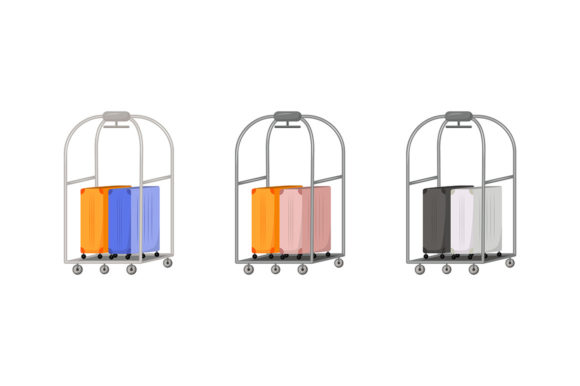
Integrating the Suitcase Delivery Flat Color Object Set into Modern Design Workflows
In the fast-paced environment of digital content creation, the efficiency of your asset library directly correlates with your output quality and speed. Whether you are a freelance graphic designer, a marketing manager for a travel agency, or an educator creating visual aids, the time spent searching for or creating basic icons can accumulate rapidly. This is where a specialized collection like the Suitcase Delivery Flat Color Object Set becomes an indispensable component of your creative toolkit. This resource is not merely a folder of images; it is a strategic asset designed to streamline the visualization of logistics, travel, and cargo concepts across various media platforms.
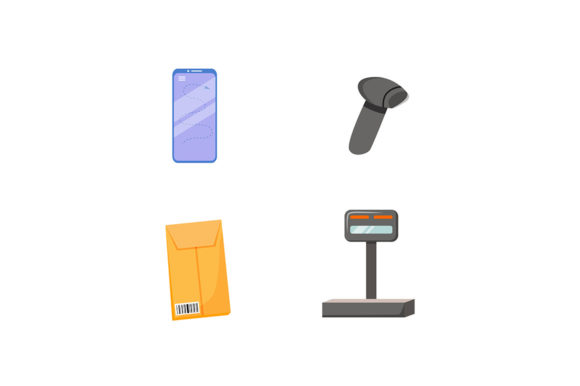
The core value of this vector object set lies in its versatility and technical readiness. Comprising isolated cartoon illustrations of racks with passenger bags and cargo transportation elements, these graphics are engineered for immediate deployment. The "flat color" aesthetic ensures that the visuals remain clean, legible, and modern, avoiding the visual clutter often associated with overly detailed or textured illustrations. When integrated into a broader design process, these assets allow creators to focus on layout, typography, and user experience rather than getting bogged down in the minutiae of drawing individual suitcases or luggage tags.
Strategic Placement in the Project Lifecycle
Understanding where to introduce the Suitcase delivery flat color vector object set within your project timeline is crucial for maximizing its utility. The integration typically occurs at three distinct phases: conceptualization, execution, and refinement.
During the conceptualization phase, these assets serve as rapid prototyping tools. If you are building a wireframe for a travel booking app or sketching out a storyboard for an animated explainer video about airport security, you need placeholders that convey meaning without distracting from the structural flow. Dragging and dropping a pre-made vector of a baggage rack allows stakeholders to immediately understand the context of "luggage handling" without needing verbal explanation. This accelerates the approval process and ensures that the team is aligned on the visual direction before high-fidelity work begins.
In the execution phase, the EPS and JPG formats included in the ZIP file offer distinct advantages depending on the medium. For web graphic design, the JPGs provide lightweight, ready-to-use raster images that load quickly, essential for maintaining site performance scores. Conversely, for print materials like brochures, business cards, or large-format signage, the EPS files ensure scalability. You can resize a suitcase icon from a tiny bullet point to a massive banner graphic without any loss of resolution or pixelation. This dual-format approach eliminates the need to convert files manually, reducing the risk of errors and saving valuable production time.
Finally, during the refinement and animation stage, the isolated nature of the illustrations proves vital. Because each element—whether it is a specific bag, a trolley, or a conveyor belt component—is separated, animators can easily import them into motion graphics software. This facilitates smooth transitions, such as a suitcase sliding onto a rack or a tag flipping over, which adds a layer of engagement to digital presentations and social media content. The clean lines of the flat design style are particularly conducive to rigging and keyframing, making complex movements easier to achieve.
Compatibility and Technical Integration
A common bottleneck in creative workflows is asset incompatibility. The Suitcase Delivery Flat Color Object Set addresses this by adhering to industry-standard file formats. The inclusion of EPS (Encapsulated PostScript) means these vectors are compatible with major design suites including Adobe Illustrator, CorelDRAW, and Inkscape. This universality ensures that regardless of your preferred software ecosystem, you can edit the color palettes, stroke weights, or shapes to match your specific brand guidelines.
For teams working in collaborative environments, consistency is key. When multiple designers are working on different sections of a larger campaign—for instance, one handling social media graphics while another manages the website interface—using a unified object set ensures visual coherence. The flat color style provides a neutral yet distinct look that blends well with various background colors and textures. By establishing this set as the primary source for all luggage-related imagery, organizations prevent the "franken-design" effect where mismatched clip art styles dilute the professional appearance of the final product.
Furthermore, the isolation of objects simplifies the workflow for web developers. When handing off designs from Figma or Sketch to development teams, having SVG-ready vectors (convertible from EPS) allows for crisp rendering on high-DPI screens. The simplicity of the flat design reduces the code complexity required to render these images, contributing to faster page load times—a critical factor for SEO and user retention.
Practical Use Cases Across Industries
The application of this baggage illustration collection extends far beyond simple decoration. Its utility spans several industries where clear visual communication regarding transport and logistics is paramount.
- Travel and Hospitality: Airlines and hotel chains can utilize these icons to create intuitive wayfinding systems. A sequence of images showing a bag moving from check-in to the carousel can be used in instructional videos or airport signage, transcending language barriers.
- E-Commerce and Logistics: Online retailers selling luggage or travel accessories can enhance product pages with contextual graphics. Instead of generic stock photos, using stylized vectors from this set can create a cohesive brand identity that feels approachable and modern.
- Education and Training: Educators developing modules on geography, tourism management, or even physics (regarding weight and balance) can use these cartoons to make abstract concepts tangible. The friendly, cartoonish style lowers the cognitive load for learners, making the material more engaging.
- App Development: UI/UX designers can incorporate these elements into the interface of ride-sharing apps, delivery tracking services, or vacation planning tools. They serve as excellent status indicators, such as showing a "bag packed" or "in transit" state.
Optimizing Workflow Efficiency
To truly leverage the Suitcase Delivery Flat Color Object Set, one must adopt an organized approach to asset management. Upon downloading the ZIP file, the immediate step should be to extract and catalog the contents into a centralized digital asset management (DAM) system or a well-structured local folder. Tagging these files with relevant keywords such as "travel," "cargo," "vector," and "flat design" ensures they are retrievable months or years later when a new project arises.
Efficiency also comes from customization. While the default flat colors are aesthetically pleasing, do not hesitate to modify them. If your brand relies on a specific shade of blue or orange, open the EPS file and apply a global color swap. This small adjustment transforms a generic asset into a bespoke brand element. Additionally, consider combining elements from the set to create new compositions. Merging a suitcase with a location pin or a calendar icon can generate unique metaphors for "upcoming trips" or "destination delivery," expanding the vocabulary of your visual storytelling.
Quality control remains a necessary step even when using pre-made assets. Before finalizing any design, review the vectors at 100% zoom to ensure no stray anchor points or overlapping paths exist, especially if you plan to animate them. Check the contrast ratios if the images are intended for accessibility-compliant web design. The simplicity of flat design usually aids in maintaining high contrast, but verifying this against your background choices is a best practice that prevents usability issues for visually impaired users.
Long-Term Value and Scalability
Investing in a high-quality vector set like this offers long-term dividends. Unlike raster images that degrade or become obsolete as design trends shift towards minimalism, flat vector graphics possess a timeless quality. They can be repurposed across countless projects without losing relevance. As your business grows or your content needs expand, having a reliable library of transportation and logistics icons means you can scale your content production without proportionally increasing your design costs or turnaround times.
Moreover, the psychological impact of consistent imagery should not be underestimated. Repeated exposure to the same style of illustration builds brand recognition. When a customer sees a specific style of suitcase icon associated with your service, it reinforces trust and familiarity. The Suitcase delivery flat color vector object set provides the foundation for this visual consistency, allowing you to build a recognizable brand language around the themes of movement, delivery, and travel.
In conclusion, the integration of specialized graphic resources is a hallmark of professional workflow optimization. The Suitcase Delivery Flat Color Object Set is more than a collection of drawings; it is a functional tool that bridges the gap between concept and completion. By understanding its technical capabilities, organizing it effectively within your asset library, and applying it strategically across your projects, you enhance both the aesthetic quality and the operational efficiency of your creative output. Whether you are designing a single webpage or orchestrating a multi-channel marketing campaign, these isolated, scalable, and versatile objects provide the clarity and professionalism required to succeed in today's visual landscape.