Visualizing Hospitality: The Power of Flat Color Vector Assets for Hotel Staff
In the fast-paced world of web design and digital animation, clarity is king. Nowhere is this more critical than in the hospitality industry, where communication must be instant, intuitive, and universally understood. Designers tasked with creating interfaces for hotel management systems, training modules, or guest-facing apps often face a specific challenge: how to represent complex operational tools without cluttering the screen. This is where a dedicated Hotel Staff Equipment Flat Color Set becomes an indispensable resource. By utilizing clean, isolated cartoon illustrations of essential items like radio transmitters, glassware, and household tools, creators can build cohesive visual languages that resonate with users immediately.
The Anatomy of Effective Hospitality Icons
When we talk about equipment in a hotel setting, we aren't just listing inventory; we are defining the workflow of an entire ecosystem. A housekeeper, a front desk agent, and a maintenance technician all rely on different tools to perform their duties. Representing these tools accurately in a digital format requires more than just a generic icon; it demands specificity. A high-quality vector object set distinguishes between a standard drinking glass and a wine goblet, or between a walkie-talkie used for security and one used for room service coordination.
The "flat color" style has emerged as the dominant aesthetic for these applications for good reason. Unlike skeuomorphic designs that try to mimic reality with shadows and textures, flat design strips away the noise. It focuses on shape and color to convey meaning. When a developer integrates a Hotel Staff Equipment Flat Color Set into a project, they are choosing speed of recognition over artistic flourish. A user scanning a dashboard needs to identify a "clean glassware" status or a "maintenance request" tool within milliseconds. The simplified, bold lines of flat vectors ensure that these elements remain legible even on small mobile screens or when scaled down for favicon usage.
Essential Components of the Collection
A comprehensive collection for this niche typically revolves around three core pillars of hotel operations: communication, sanitation, and maintenance. Let's break down why specific items like the radio transmitter and clean glassware are so vital in these graphic packs.
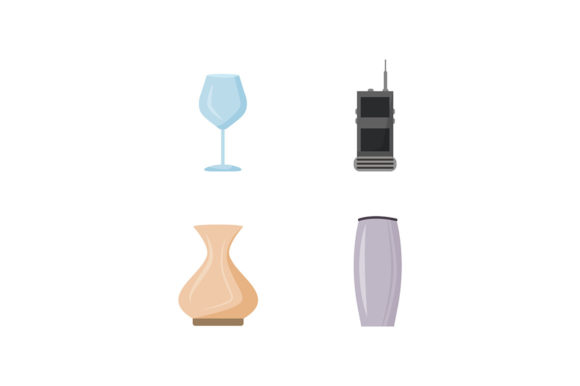
Communication Tools: The radio transmitter is the lifeline of hotel logistics. In a vector set, this isn't just a black box; it's often depicted with distinct antennas, buttons, and perhaps a signal wave to indicate activity. For an animation collection, having this asset allows designers to create scenarios where staff coordinate during a crisis, manage check-ins, or direct valet services. The visual cue of a radio implies immediacy and teamwork.
Sanitation and Service: Clean glassware represents the pinnacle of hotel hygiene and service quality. In a flat illustration, the challenge is to depict "cleanliness" without using photorealistic sparkles. Designers achieve this through the use of light blue highlights, pristine white outlines, and perfect geometric symmetry. When these assets are isolated, they can be dragged and dropped into inventory management interfaces or housekeeping checklists, providing a clear visual confirmation that a task is complete.
Miscellaneous Household Tools: This category is the catch-all that makes the set truly functional. It includes pliers, screwdrivers, cleaning sprays, and lint rollers. These miscellaneous household tools isolated in cartoon style serve a dual purpose. First, they humanize the technical aspects of hotel maintenance, making training materials less intimidating for new staff. Second, they provide the necessary variety for game developers creating simulation games where players manage a virtual hotel. The diversity of tools ensures that every possible scenario, from fixing a leaky faucet to polishing silverware, can be visually represented.
Integrating Vectors into Modern Workflows
The true value of purchasing a ZIP file containing EPS and JPG formats lies in flexibility. Modern web graphic design and animation collections require assets that can bend to the will of the creator without losing quality. The EPS (Encapsulated PostScript) format is the gold standard here. Because these are vector objects, they are mathematically defined rather than pixel-based. This means a designer can take a tiny icon of a radio transmitter from a mobile app mockup and blow it up to the size of a billboard for a hotel chain advertisement without any loss of resolution or jagged edges.
Conversely, the inclusion of JPG files offers immediate usability for non-designers or for rapid prototyping. A project manager might need to drop a quick image of "clean glassware" into a PowerPoint presentation or a Slack update to illustrate a point about inventory levels. Having ready-to-use raster images saves time, while the underlying vector files ensure that if the marketing team later decides to animate that same glass spinning on a website header, the source material is ready.
Animation is another frontier where these sets shine. Because the illustrations are "isolated," meaning they have transparent backgrounds and distinct boundaries, they are perfect for rigging in software like Adobe After Effects or Spine. Imagine an onboarding video for new hotel staff. Instead of static slides, the trainer can animate the Hotel Staff Equipment Flat Color Set. The radio transmitter can beep, the cleaning spray can emit a mist, and the glassware can clink together. This level of engagement transforms dry procedural information into memorable visual stories.
Why Consistency Matters in Branding
One of the hidden dangers of assembling icons from various free sources online is stylistic inconsistency. You might find a realistic radio icon next to a hand-drawn wrench, creating a disjointed user experience that feels unprofessional. A curated Hotel Staff Equipment Flat Color Set solves this by ensuring every item shares the same stroke weight, color palette, and perspective.
This consistency builds trust. When a guest uses a hotel's app to request extra towels or report a broken item, the icons they see reflect the brand's attention to detail. If the graphics look haphazard, the user subconsciously questions the quality of the service. By using a unified vector object set, hotels and software vendors signal that they have thought through every aspect of the user journey, right down to the pixel.
Practical Considerations for Selection
Before adopting a specific graphic pack, there are several factors professionals should evaluate. First, consider the color adaptability. While the set comes with predefined flat colors, can these be easily changed to match a specific hotel's branding? A luxury boutique hotel might need gold and navy accents, while a budget chain might prefer bright reds and blues. A well-constructed EPS file allows for global color swaps, making the asset future-proof.
Second, look at the level of detail. Is the "miscellaneous household tools" category broad enough? Does it include niche items like a key card encoder or a luggage tag printer? The more specific the tools, the more versatile the set becomes for specialized applications. However, there is a balance to strike; too much detail can clutter the flat design aesthetic. The best sets find the sweet spot where an object is instantly recognizable but remains simple enough to scale.
Finally, think about the licensing and usage rights. For commercial projects, especially those involving large hotel chains or widely distributed software, ensuring the ZIP file comes with a robust commercial license is non-negotiable. This protects the agency or developer from legal headaches down the road.
The Future of Digital Hospitality Assets
As the hospitality industry continues to digitize, moving from paper logbooks to cloud-based property management systems, the demand for high-quality, semantic visuals will only grow. The Hotel Staff Equipment Flat Color Set is not just a collection of pictures; it is a vocabulary for the modern hotelier. It bridges the gap between physical labor and digital management.
Whether you are building an interactive training module for housekeepers, designing a sleek dashboard for front-desk managers, or creating an engaging mobile game about running a resort, these vector assets provide the foundation. They allow creators to focus on the narrative and functionality of their projects, knowing that the visual representation of a radio transmitter or a stack of clean plates is handled with professional precision. In a world where user experience dictates success, having the right tools—both the ones depicted in the graphics and the graphics themselves—is the ultimate competitive advantage.